
11 May 2026
Changed Oil on Time but Your Bike Still Sounds Off? 5 Signs Your Motorcycle Oil Has Gone Bad
A frustrating situation many riders face: you changed the oil just six weeks ago, barely 2,500 km on the new fill, but this morning there was a faint ticking from the engine on cold start — or the bike feels hotter than usual after 30 minutes in traffic. First thought: "how can the oil already be bad?"
The truth is, oil can degrade faster than the recommended change interval for entirely predictable reasons: extended idling in midday traffic heat causes engine temperature spikes, sustained high-RPM riding accelerates oxidation, or the oil being used simply is not matched to actual riding conditions.
5 signs below help you identify bad motorcycle oil early — before the engine starts taking real wear damage.
1. Oil on the Dipstick Is Very Dark or Abnormally Thick
Fresh oil is a clear amber-brown color. It naturally darkens over time as it absorbs combustion byproducts — that is normal. But if oil has turned jet black or noticeably thick and sludgy before reaching 2,000 km, the oil has suffered heavy oxidation from excessive heat or a poor-quality base stock.
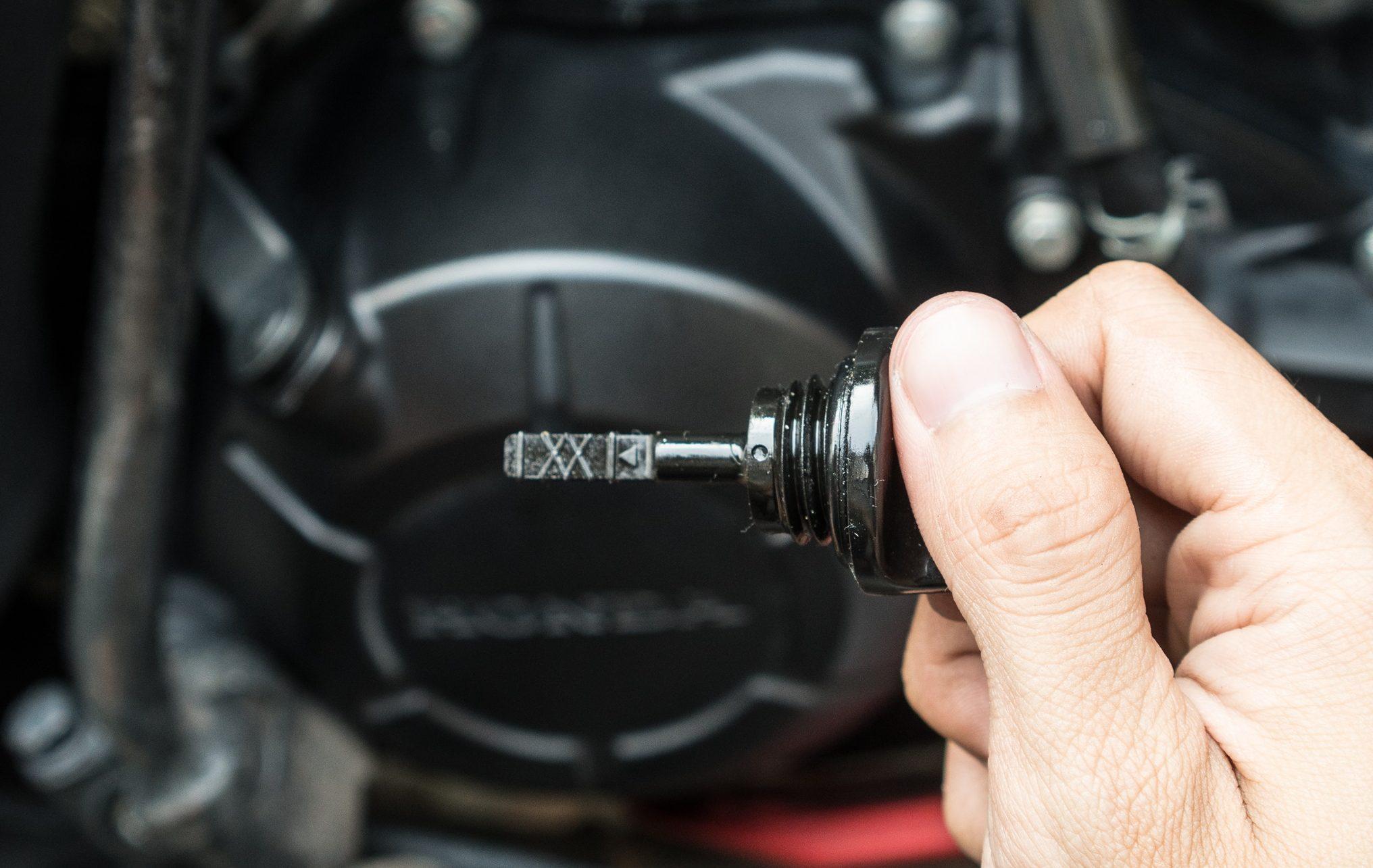
How to check correctly: turn off the engine, wait 3–5 minutes, pull the dipstick, wipe clean with a cloth, re-insert fully, then pull it out a second time. Check color and level: pale amber-brown is good, dark brown means change soon, black or thick means change immediately.
2. Ticking or Knocking Sound on Cold Start
A light ticking sound in the first 5–10 seconds of cold start indicates the oil film has thinned too much — the lubricant can no longer cling to metal surfaces overnight, requiring a few seconds to re-circulate before it fully protects engine components. If the ticking persists beyond 10 seconds or appears when the engine is already warm, that is a more serious issue requiring immediate inspection.
Manual clutch bikes at 150cc are especially sensitive to this sign due to their high RPM range and greater wet clutch load — even minor ticking on a manual bike should not be ignored.
3. Engine Runs Noticeably Hotter Than Usual After Traffic
Engine oil plays a critical heat transfer role — it carries thermal energy away from the combustion chamber, pistons, and internal components. As oil degrades and loses viscosity, its heat transfer capacity drops with it. Practical indicator: your left leg feels noticeably more heat from the engine after 30 minutes in traffic, or the temperature gauge reads higher than its normal position.
4. Abnormal Oil Consumption — Having to Top Up Before the Next Change
If the oil level drops below the MIN mark before reaching 3,000 km, there are two possibilities: the engine has an oil leak (check gaskets, drain plug seal), or the oil is being burned because viscosity has dropped too far — excessively thin oil passes through piston rings into the combustion chamber, where it burns along with fuel and produces bluish-white exhaust smoke.
5. Loss of Power — Throttle Feels Heavier Than Before
When the oil film is no longer thick enough to fully separate metal surfaces, internal friction increases — the engine wastes more energy overcoming its own friction, leaving less power available at the rear wheel. Common signs: the throttle feels stiffer when accelerating from a stop, and the bike does not pull as hard as it normally would despite no obvious mechanical issue.
Prevention: Match Oil Quality to Riding Conditions
Early oil failure most often comes from using mineral or semi-synthetic oil in the demanding stop-and-go heat of Ho Chi Minh City. Fully synthetic oils with a high Viscosity Index maintain stable viscosity much better under sustained high heat — options like Repsol Moto Racing 4T, AMSOIL Metric, or MegaMAX Racing 4T are all strong choices depending on budget.
Conclusion
Changed oil on schedule but seeing one of these five signs of bad motorcycle oil? Do not wait for the next km mark — check the dipstick now and change early if needed. The cost of one early oil change is far lower than the cost of engine repair from accelerated wear. For advice on a better oil match for your bike and riding conditions, contact Huynh Chau at daunhothuynhchau.com or hotline 0908.315.193.
Huynh Chau Oil Importer & Distributor